20 Free Facts For Brightfunded Prop Firm Trader
Wiki Article
Low-Latency Trade In An Appropriate Firm Setup Is It Possible And Is It Worth It?
The lure of trading low-latency - executing strategies that benefit from small price differences or fleeting market inefficiencies measured in milliseconds -- is powerful. The concern for a funded trader of a prop firm isn't just about profit but also about its viability and compatibility with the retail-oriented prop model. These firms do not provide infrastructure. Instead, they are focused on accessibility and risk-management. In attempting to incorporate a low-latency operation onto this foundation involves navigating a gauntlet of technical limitations, rules-based bans and economic skepticism which can make the process not just challenging but even detrimental. This study reveals 10 crucial facts that differentiate the fantasy of high-frequency trading from the reality. It clarifies why it is a futile attempt for a lot of people, but an absolute necessity for those who are able to do it.
1. The Infrastructure Gap – Retail Cloud vs. Institutional Colocation
The most effective low-latency strategies call for physical colocation of your servers in the same data center that houses the engine that matches your exchange in order to reduce the time it takes for network traffic (latency). Proprietary companies offer access to brokers' cloud servers. They usually are situated in general cloud hubs. Orders travel from the home, via the prop firm's server, to the broker's servers, and then to the exchange. The route is filled with a lot of uncertainty. The infrastructure was designed for reliability and costs, not speed. The delay introduced (often 50-300ms for a round trip) is in low-latency terms. This means that you'll never be at the end of the queue, filling orders after those who are institutional players have already gotten the edge.
2. The Rule Based Kill Switch: No AI, No HFT, and Fair Usage Clauses
In almost all retail prop companies the terms of service are clear about the prohibition of High-Frequency Trading. These are usually described as "artificial intelligence", or"automated latency". These strategies are described as "abusive", "non-directional" or "non directed". This type of behavior could be identified using ratios of order-to-trade or cancellation patterns. Violation of these clauses will result in immediate account closing and the loss of profits. These rules exist because prop methods can result in significant charges for exchanges to the broker and not generate the predictable spread-based income that the prop model depends on.
3. The Prop firm isn't your partner. Models of economics are not aligned
The revenue model of a prop company is typically an equal share of your profits. If a low-latency approach is ultimately successful, could yield small, consistent profits with high turnover. The costs (data feeds and fees for platforms) for the firm are fixed. The company prefers a trader that makes 10% per year with 20 trades to one who makes an average of 2% for 2,000 trades because the burden of administration and expenses are the same. Your performance metrics (tiny and frequent wins) are not in line with their profit-per-trade efficiency metrics.
4. The "Latency Arbitrage" Illusion and Being the Liquidity
Many traders believe they are able to use latency arbitrage between different brokers or even assets within the same prop firm. This is a myth. The feed of the firm is usually an unconsolidated and somewhat delayed feed from one source of liquidity or their own internal risk book. The feed you trade on is not directly market feeds; you are trading against the quoted price of the company. Arbing between two prop firms is a challenge, as it is difficult to arbitrage your feed. Your low-latency order becomes free liquidity to the firm's risk engine.
5. The "Scalping" Redefinition: Maximizing the Possibilities, not Chasing the Impossible
It is possible, in a prop context to perform scalping that is lower-latency instead of low-latency. This is accomplished by using the VPS (Virtual Private Server) situated geographically near to the broker's trade server in order to eliminate the inconsistent home internet delay, and aiming to execute between 100 and 500ms. This is not about beating the market, but rather having a reliable, predictable approach to take a short-term (1-5 minutes) direction. This benefit is derived from an analysis of the market and a successful risk management. This isn't due to microsecond speeds.
6. The Hidden Cost of Architecture: Data Feeds, VPS Overhead
To make trading with lower latency possible, you'll require a an extremely high-performance VPS as well as professional data. Prop companies rarely provide the latter and is costly monthly costs between $200 and $500. Before you can make any profit, your margin has to be strong enough that it can cover the fixed costs. Smaller strategies will not be able to do this.
7. The Drawdown Rule and Consistency Rule Problem
Low-latency (or high-frequency) strategies are often associated with high win rates. This can result in an "death by the thousand cuts" scenario for the prop firm's daily drawdown rules. The strategy could be profitable at the end of the day's trading however, 10 losses of 0.1 percent over the course of an hour could be enough to exceed the 5% daily limit and make the account fail. The strategy's intraday volatility profil is in complete opposition to the crude tool of daily drawdown limits that are designed for swing trading with slower styles.
8. The Strategy Profit Limit: Capacity Limitation
True low-latency strategies have a strict capacity limit. They can only be allowed to trade a certain amount prior to losing their edge due to the impact of the market. If you could achieve this feat with a $100K prop the profits you would earn will be tiny in dollar terms. This is because it is impossible to increase the size of your account and not lose the advantage. The whole exercise could be insignificant, since scaling to a 1M account is impossible.
9. You can’t win in the race for technological advancement
Low-latency trading can be described as the use of a multi-million-dollar technology arms race that involves customized hardware (FPGAs) as well as Kernel bypass and microwave networks. As a broker for retail props, you must compete against firms who spend as much money on an IT budget per year as the sum of capital allotted to prop firms' traders. The "edge" that you get by having a higher VPS or a code that is optimized, is merely temporary advantages. You can bring a knife to an atomic war.
10. The Strategic Pinch: Low-Latency Tools for High-Probability Execution
The only way to achieve success is a complete change in strategy. Use the tools of the low-latency world (fast VPS, quality data, efficient code) not to chase micro-inefficiencies, but to execute a fundamentally sound, medium-frequency strategy with supreme precision. To achieve the highest possible timings for entry for breakouts, it's important to use level II data, with stop-loss or take-profit systems that respond immediately to prevent slippage and to automate the swing trading system to automatically open when specific conditions are met. The technology used here is to gain an advantage from the market structure or momentum, not to generate that edge. This is in line with prop firm rules that focus on profitable profits targets, and transforms a technological handicap into a real, long-lasting execution advantage. View the top rated brightfunded.com for more advice including trading funds, site trader, trading terminal, funded futures, topstep prop firm, trader software, take profit trader review, funded account, top step trading, top step and more.
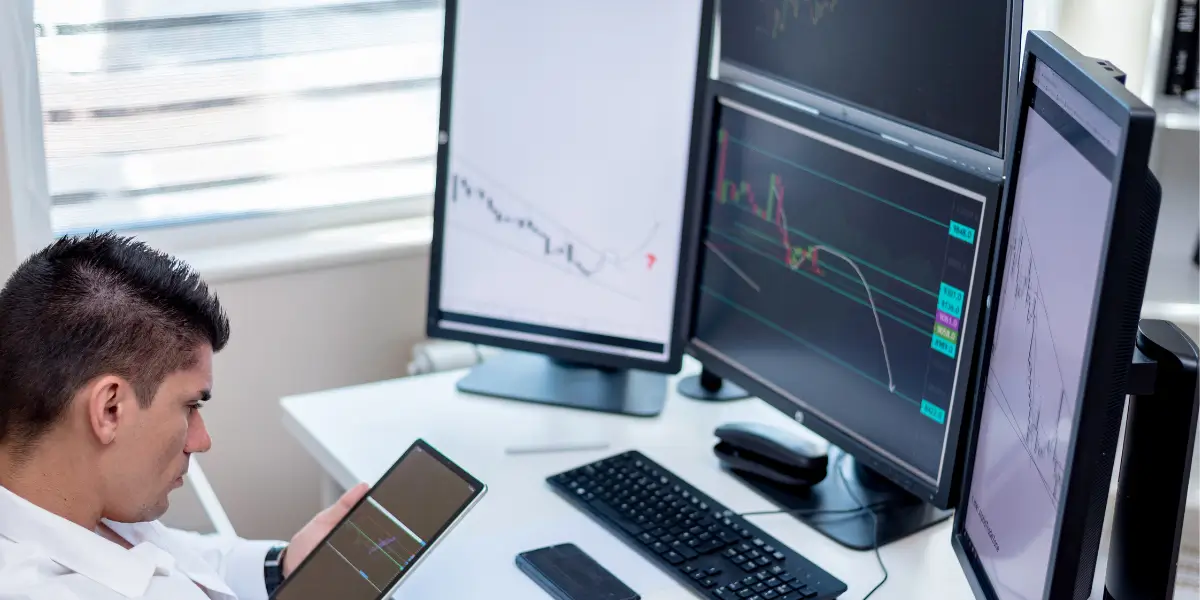
The AI Co-Pilot For Prop Traders: Tools To Backtest, Journaling, And Emotional Discipline
The rise of AI that generates signals promises an era that goes beyond trading. For the privately-owned trader who is funded AI's greatest impact lies not in replacing human judgement, but in acting as an ever-present impartial co-pilot of the three pillars of sustainable success that is systematic validation of strategies and introspective performance reviews, and psychological regulation. The three areas of backtesting (journaling as well as emotional discipline and strategy validation) are both time-consuming and subjective. They also tend to be susceptible to biases of humans. An AI copilot turns these areas into scalable, highly data-driven, and truthful processes. It's not about letting chatbots trade for you; it's about using a computational partner to thoroughly examine your performance, analyze your decision-making, and enforce the emotional rules you set for yourself. It represents the evolution from discretionary discipline to quantified, augmented professionalism, turning the trader's greatest weaknesses--cognitive biases and limited processing power--into managed variables.
1. Backtesting Prop Rules with AI Beyond Curve Fitting
Traditional backtesting is geared towards the best possible profit, usually by creating strategies that are "curve-fit" to past data and do not work in real markets. First, an AI copilot is able to perform adversarial backtesting. Instead of asking "How much profit? You instruct the program to: "Test your strategy using the historical data and prop firm rules (5 % daily drawdown, 10 % maximum target for profit, 8% goal for profit). Then, stress-test it. Find the three months that were the most difficult to test in the past ten years. Which rule was the first to be violated? (Daily or Max Drawdown?) and how often? Simulate the starting dates changing each week for a five-year period." This does not reveal if your plan is profitable. Instead, it will show you how the strategy could be maintained and implemented under the specific pressure points of your company.
2. The Strategy Autopsy Report How to differentiate the edge from the luck
After a sequence of trades (winning or losing) or losing, an AI co-pilot is able to do a strategy autopsy. It'll need your trade logs, which include the time of entry and exit, as well as the instrument and reasoning and historical market data. It will analyze the 50 trades you instruct it to. Each trade must be classified in accordance with my claim of a technical set-up (e.g. RSI divergence, bull flag breakout). Calculate the winning rate and the average P&L for each type. Review the price action after entry to 100 historical examples of the same set-up. Calculate what percentage of my profits came from setups that statistically beat their historical average (skill) against those that underperformed but I got lucky (variance)." Journaling is no longer about "I felt great" but an forensic examination of your edge.
3. The "Bias Check" Protocol to Pre-Trade
Before entering a trade the cognitive biases of traders are most prominent. A AI pilot is able to serve as a pre-trade procedure. It allows you to input the details of your planned trades (instrument, direction of the trade, the size, and rationale) into a logical request. The AI already knows your trading rules. The AI will then check: "Does the trade violate any of my five essential entry requirements?" Does this position exceed my 1%-risk rule in relation to the distance between my stop loss and the size of my position? Based on my journal has I made losses in the two previous trades with the same configuration, which could indicate frustration-chasing? What are the economic events scheduled in the next 2 hour to this tool?" This 30 second consultation creates the need for a thorough review, which helps to thwart impulsive decisions.
4. Dynamic Journal Analysis From Description to Predictive Information
A traditional journal is static. An AI-analyzed journal becomes a dynamic diagnostic tool. Each week, your journal entry (text and/or data) is sent to the AI with the following command: "Perform emotion analysis on my "reason for entering" and "reason for leaving" notes. Examine the results of trades in relation to sentiment polarity. Recognize the most frequent phrases used in losing trades (e.g., 'I think it has bounced,' or I'll just scalp a short one'). Write down my three biggest psychological errors of this past week, and then determine what conditions in the market are most likely (e.g. volatility at a low level and huge victory). Introspection can be used to serve as an indicator of market conditions.
5. Enforcers as well as Post-Loss Protocol for "Emotional-Time-Outs"
The rule of law is not willpower. It's the key to emotional discipline. You can program your AI copilot to act as an enforcer. Set up a clear procedure: "If I have two consecutive losses or a single loss that exceeds 2percent of my account, I am to trigger an obligation-based 90-minute lockout of my trading. You'll ask me to complete a written questionnaire after the loss. 2) What was the real data-driven cause for the loss? What is the best setup for me to proceed? "You will not access this terminal until I've given you satisfactory, non-emotional answers." AI is the apex authority that you've enlisted to take over your limbic system in moments of stress.
6. Scenario Simulation for Drawdown Preparedness
The fear of being in the dark is often a fear of drawdown. A AI copilot can mimic your specific emotional and financial problems. You can then tell the AI: "Using the current metrics of my strategy (win rate of 45%), avg. wins 2.2 percent, and avg. losses 1.0 percent, try to simulate 1,000 100-trade sequences." I want to see the spread of drawdowns with maximum value from top to the bottom. What is the worst-case 10 trade losing sequence that it creates during the simulation? Then, I project my mental journal entries based on the simulated losing streak and apply it to my funded account balance. Rehearsing in a quantitative and mental way your worst-case situations you'll become insensitive to the emotional impact that they could have.
7. The "Market Regime" Detector and Strategy Switch Advisor
Most strategies work only within specific market conditions (trending, fluctuating, volatile). AI can serve as an alert for regimes in real-time. AI can be programmed to study simple metrics like ADX (average daily variation), Bollinger Band width or ADX on your assets that you trade and categorize the current state of their conditions. In addition you can specify: "When the regime shifts from 'trending' to 'ranging over three consecutive days, set an alert and pull up my "ranging market" strategy checklist. You can also create an alarm to me to decrease the size of my portfolio by 30% and change to mean-reversion strategies. This turns the AI from a tool that is passive into an active, situational awareness manager, keeping your strategies in line with the surrounding environment.
8. Automated Benchmarking of Your Performance Against the Past
It's not difficult to lose track of your performance. An AI co-pilot can automate benchmarking. It could be instructed to "Compare the last 100 trades to the previous 100." Calculate the changes in: winning rate, profit factor, and average duration of trade. Is my performance a statistically significant improvement (p-value less than 0.05). Create a dashboard to display the data." This will provide objective motivational feedback to counter the subjective feelings of being "stuck", that could lead to risky strategies of hopping.
9. The "What-if" Simulator that allows users to decide on changes to rules and scales
When considering changes (e.g. the possibility of extending stop-losses, targeting a higher profits in the evaluation process) it is possible to use the AI for a "what-if" simulation. "Take an examination of my trading history. Find out the results of every trade if you employed a larger 1,5x stop loss, but maintained the same level of risk for each trade. How many of the losing trades that I have made in the past have turned into winners? How many of my past winners would have turned into larger losses? Would I have seen an improvement or decline in my profitability? Do I exceed my daily drawdown limit on specific bad days?" This method of data-driven decision making will eliminate the need to play with a system that is working.
10. Build Your Own "Second Brain:" The Cumulative Information Base
An AI co-pilot can serve as the basis of a "second brain," which is your personal system. Every backtest, journal analysis, bias check and even simulation, is a record. As time passes, the system will be trained to understand your unique psychology, particular strategies, and constraints for your prop company. The knowledge base, unique to you, develops into an unreplaceable resource. It doesn't offer you general trading advice; it gives you suggestions which is filtered through the entire history of your trading. This transforms AI into a valuable private intelligence tool for business. You become more adaptable and more disciplined as well as scientifically sound compared to traders who rely on their intuition and intuition alone.
